

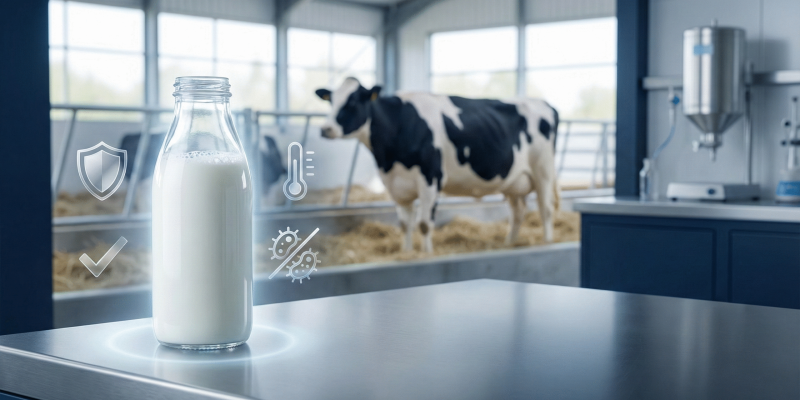
Milk is one of the most complete and widely consumed foods in the world. Its nutritional value, versatility, and role in human health make milk quality and safety a top priority for dairy farmers, processors, regulators, and consumers alike. For modern dairy systems, producing safe, high-quality milk is not only a legal requirement but also a foundation for profitability, consumer trust, and long-term sustainability.
This article provides a practical and science-based overview of milk quality and safety, focusing on key quality parameters, major safety risks, on-farm practices, and the role of the dairy value chain.
What Is Milk Quality?
Milk quality refers to the physical, chemical, microbiological, and sensory characteristics of milk that determine its suitability for consumption and processing. High-quality milk is clean, free from harmful contaminants, has a normal composition, and meets regulatory and market standards.
Key dimensions of milk quality include:
- Compositional quality: Fat, protein, lactose, and total solids content.
- Hygienic quality: Microbial load and cleanliness.
- Udder health indicators: Somatic cell count (SCC).
- Chemical quality: Absence of antibiotic residues, toxins, and adulterants.
- Sensory quality: Normal taste, smell, and appearance.
Milk Safety: Why It Matters
Milk safety focuses on protecting consumers from biological, chemical, and physical hazards. Unsafe milk can transmit diseases, cause food poisoning, and lead to serious public health concerns. From a business perspective, safety failures result in milk rejection, financial losses, penalties, and damage to brand reputation.
Ensuring milk safety is a shared responsibility across the entire dairy chain, starting from the cow and ending at the consumer.
Major Hazards Affecting Milk Safety
1. Biological Hazards
Biological hazards are mainly caused by microorganisms such as bacteria, viruses, and parasites.
Common milk-related pathogens include:
- Escherichia coli
- Salmonella spp.
- Listeria monocytogenes
- Staphylococcus aureus
These organisms may enter milk through infected udders, contaminated equipment, dirty water, or poor handling practices. Mastitis is one of the most important contributors to microbial contamination.
2. Chemical Hazards
Chemical hazards are often invisible but highly critical.
Key chemical risks include:
- Antibiotic residues from improper drug use or failure to observe withdrawal periods.
- Mycotoxins, especially aflatoxin M1, originating from contaminated feed.
- Cleaning and disinfectant residues due to improper rinsing of equipment.
- Pesticides and heavy metals from the environment.
Even small amounts of these substances can make milk unfit for consumption and processing.
3. Physical Hazards
Physical contaminants include foreign materials such as hair, sand, insects, plastic, or metal fragments. These usually result from poor hygiene, damaged equipment, or inadequate filtration.
Key Indicators of Milk Quality
Somatic Cell Count (SCC)
SCC is a primary indicator of udder health and milk quality. High SCC values are associated with mastitis and lead to reduced milk yield, lower processing efficiency, and shorter shelf life of dairy products.
Maintaining a low SCC requires effective mastitis prevention, proper milking routines, and good cow comfort.
Total Bacterial Count (TBC)
TBC reflects overall hygiene during milking, storage, and transport. High bacterial counts indicate poor cleaning, delayed cooling, or contaminated equipment.
Rapid cooling of milk to 4 °C or lower is critical to control bacterial growth.
Milk Composition
Fat and protein content directly affect the value of milk for processing, especially for cheese and butter production. Nutrition, genetics, stage of lactation, and health status of cows influence milk composition.
On-Farm Practices for Safe and High-Quality Milk
Cow Health and Welfare
Healthy cows produce safer milk. Key practices include:
- Regular mastitis screening and prompt treatment.
- Proper housing, ventilation, and bedding management.
- Balanced nutrition to support immunity and rumen health.
Milking Hygiene
Milking is a critical control point for milk safety.
Best practices include:
- Cleaning and drying teats before milking.
- Using individual towels or disposable paper.
- Post-milking teat disinfection.
- Wearing clean gloves and maintaining personal hygiene.
Equipment Cleaning and Sanitation
Milking machines and storage tanks must be cleaned and sanitized after every milking.
Effective cleaning involves:
- Correct water temperature.
- Proper detergent and disinfectant use.
- Adequate circulation time.
- Thorough rinsing to avoid chemical residues.
Milk Cooling and Storage
Milk should be cooled immediately after milking to slow bacterial growth. Delays in cooling are one of the most common causes of poor milk quality.
Responsible Use of Veterinary Drugs
Antibiotics should only be used under veterinary guidance. Farmers must strictly observe withdrawal periods and keep accurate treatment records. Milk from treated cows must never enter the bulk tank until it is confirmed residue-free.
Residue testing at farm and processor level is a key safeguard for consumer safety.
Role of Processors and Quality Assurance Systems
Dairy processors play a vital role in milk safety by implementing quality assurance systems such as Good Manufacturing Practices (GMP), Hazard Analysis and Critical Control Points (HACCP), and regular laboratory testing.
Milk that does not meet quality standards should be rejected, not blended or diluted.
Milk Quality as a Business Advantage
High milk quality is not just about compliance. It is a competitive advantage.
Benefits of producing high-quality milk include:
- Premium price payments.
- Reduced product losses and processing issues.
- Stronger relationships with processors.
- Increased consumer confidence and brand value.
Conclusion
Milk quality and safety begin at the farm and extend throughout the dairy value chain. By focusing on cow health, hygiene, responsible drug use, and proper milk handling, dairy producers can consistently deliver safe, high-quality milk.
For modern dairy systems, quality is not an option. It is a responsibility, a standard, and an opportunity to build a sustainable and trusted dairy industry.
Leave Comment